
[Book] Continuous Discovery Habits by Teresa Torres
Discover products that create customer value and business value

Core Insight
Six mindsets that must be cultivated to successfully adopt the habits outlined in this book.
Outcome-oriented: Think in outcomes rather than outputs
Customer-centric: Do not lose sight of the fact that the purpose of business is to create and serve a customer
Collaborative: Reject siloed model
Visual: Tap into the immense power of spatial thinking
Experimental: Identify assumptions and gather evidence
Continous: Infuse discovery continously throughtout development
Opportunity Solution Tree
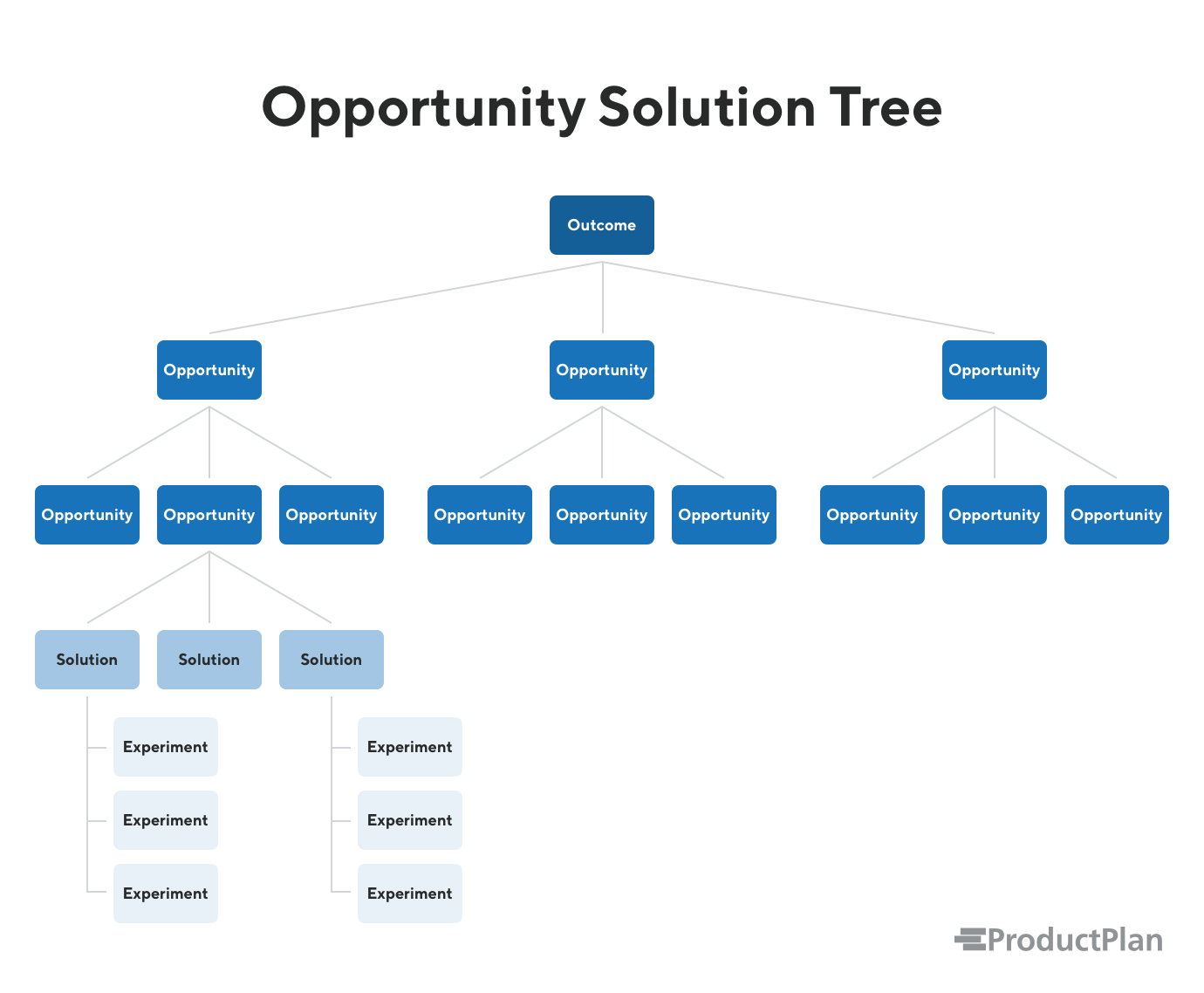
A guide for product trios
Product trios tend to fall into four categories when it comes to setting outcomes:
They are asked to deliver outputs and do not work towards outcomes
Their product leader sets their outcome with little input from the team
The product trio sets their own outcomes with little input from their product leader
The product trio is negotiating their outcomes with their leaders as described in this chapter
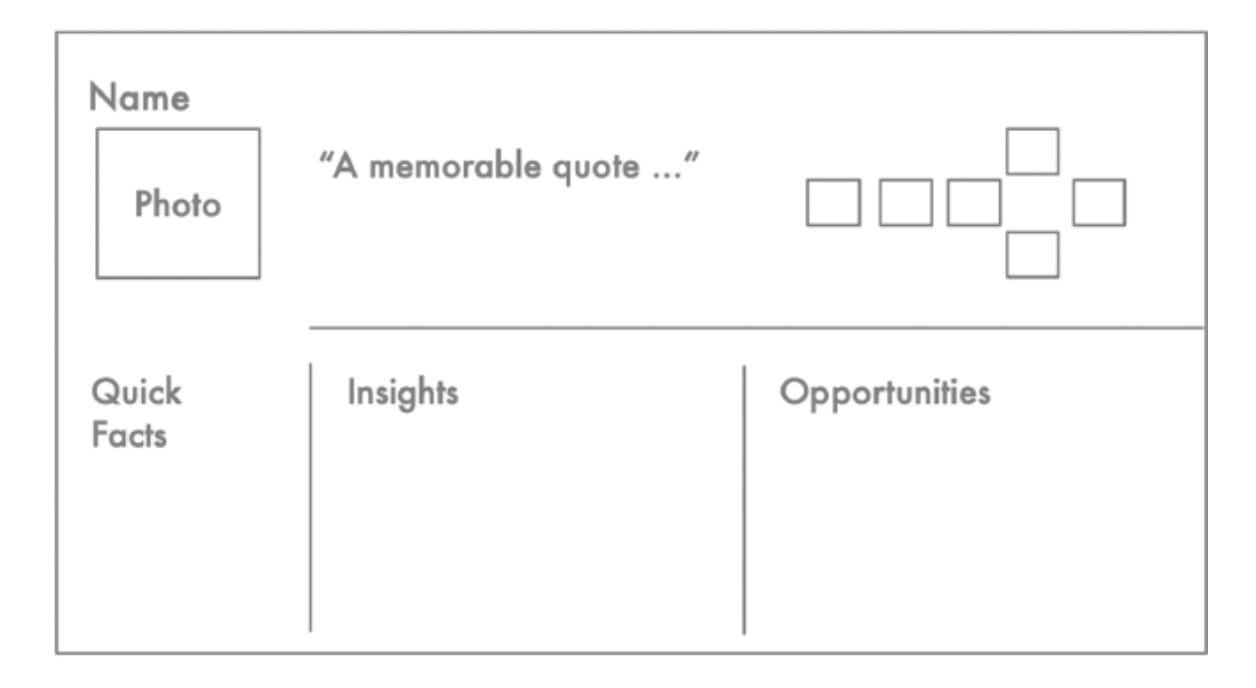
Interview One Pager
Two way door principle
Jeff Bezos 2015 letter to shareholders: Level 1 (hard to reverse) and Level 2 decisions (easy to reverse)
One way door decision: When we walkt through the door, and upon seeing the other side of the door, we are able to see the consequences of our decisions: however, we cannot turn around
Two way door decision: When we see the consequences of our decisions, we can go back and change it.
Brainstorming done well
Review your target opportunity
Generate ideas alone
Share ideas across your team
Repeat steps 2 and 3
Escalation of commitment
A bias in which the more we invest in an idea, the more committed we become to that idea
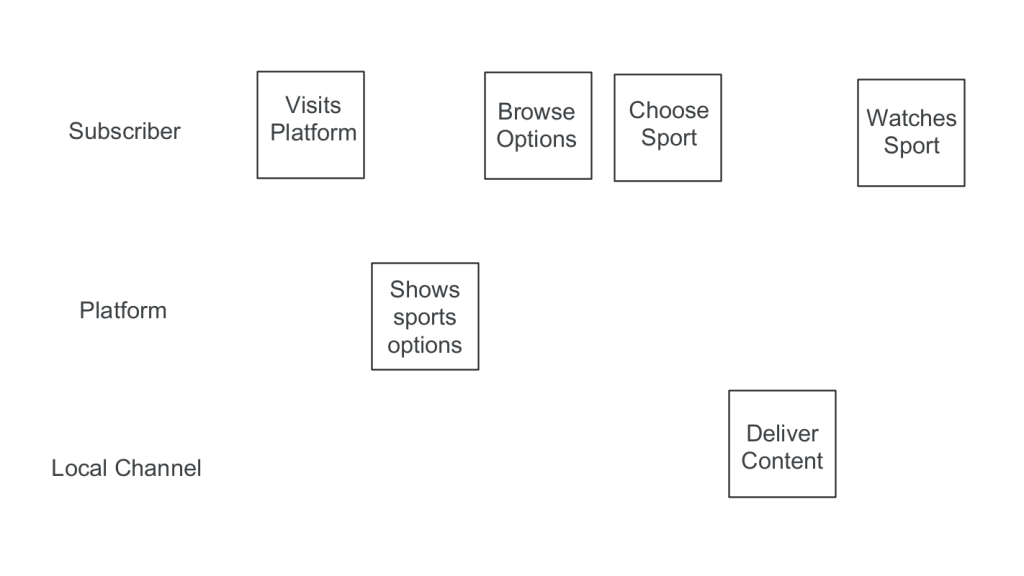
Story Mapping
Quote to ask teams:
If the New York Times ran a front-page story about this solution that included your internal conversations about how the solution would work, what data you collected, how you used it, and how different players in the ecosystem benefited or did not, would that be a good thing?
Early showcasing
When we show our work, we are inbiting our stakeholders to co-create with us. Instead of sharing our conclusions and inviting them to share their preferences, we are sharing our work and inviting them to assess our thinking and to add their own. we are leveraging their expertise and improving our process.
Keystone Habit
“Keystone habits start a process that, over time, transform everything”. They are habits that once adopted drive the adoption of other habits
Key Quotes
“I enjoy Disneyland, ice cream, and mountain biking. These products were designed to address my desires, not solve my problems”
“Product teams often have to do some discovery work to identify the connections between product outcomes (the metrics they can influence) and business outcomes (the metrics that drive the business)”
“We asked out customers the wrong questions. We built a product based on a coherent story told by both the thought leaders in our space and by our customers themselves. But it was not a story that was based in reality. If you want to build a successful product, you need to understand your customers´actual behaviour - their reality- not the story they tell themselves”
“Creative teams know that quantity is the best predictor of quality” - Leigh Thompson, Making the team
“You will never stumble upon the unexpected if you stick only to the familiar” - Ed Catmull, Creativity Inc
“Our goal as a product team is not to seek truth but to mitigate risk. We need to do just enough research to mitigate the risk that our companies cannot bear and no more”
“Trusting the process can give you the confidence to take risks” - Chip and DAn Health, Decisive
“Instead of asking for permission or waiting for someone to show you how, start small. Iterate from there”
Key Takeaways
Product success is driven by outcomes, not output. Measure impact on customers and the business—not features shipped.
Customer reality beats customer opinion. Design for observed behavior, not stated preferences or compelling narratives.
Discovery is a continuous discipline. Learning must persist throughout delivery, not precede it.
Strong product teams align through shared outcomes. Product, design, and engineering collaborate with leadership to negotiate—not receive—goals.
Visualization enables better thinking and faster alignment. Spatial tools clarify complexity and improve decision quality.
Assumptions represent business risk. Identify them early and validate with evidence proportionate to the risk.
Move fast on reversible decisions. Apply the two-way door principle to accelerate learning and execution.
Idea quality follows idea quantity. Effective brainstorming prioritizes volume before refinement.
Beware sunk-cost bias. Escalation of commitment can lock teams into failing solutions.
Transparency strengthens decisions and trust. Early showcasing invites collaboration and improves outcomes.
Ethical, data-informed work should withstand public scrutiny. Teams should be comfortable defending their process and evidence.
Start small, iterate often. Momentum comes from action, not permission.
Keystone habits compound over time. The right practices unlock broader organizational change.